
Cell Phone Frequency Bands: Why They Matter for Your Signal
Table of Contents
From urgent work calls to late-night social media scrolling, your smartphone has become an essential part of daily life. But have you ever wondered how your device manages to stay connected nearly everywhere you go? The answer lies in cell phone frequency bands—the unseen electromagnetic highways that carry our digital lives through the air. Understanding these frequency bands is important because they affect everything from your signal strength to your phone’s price tag.
A Spectrum of Possibilities
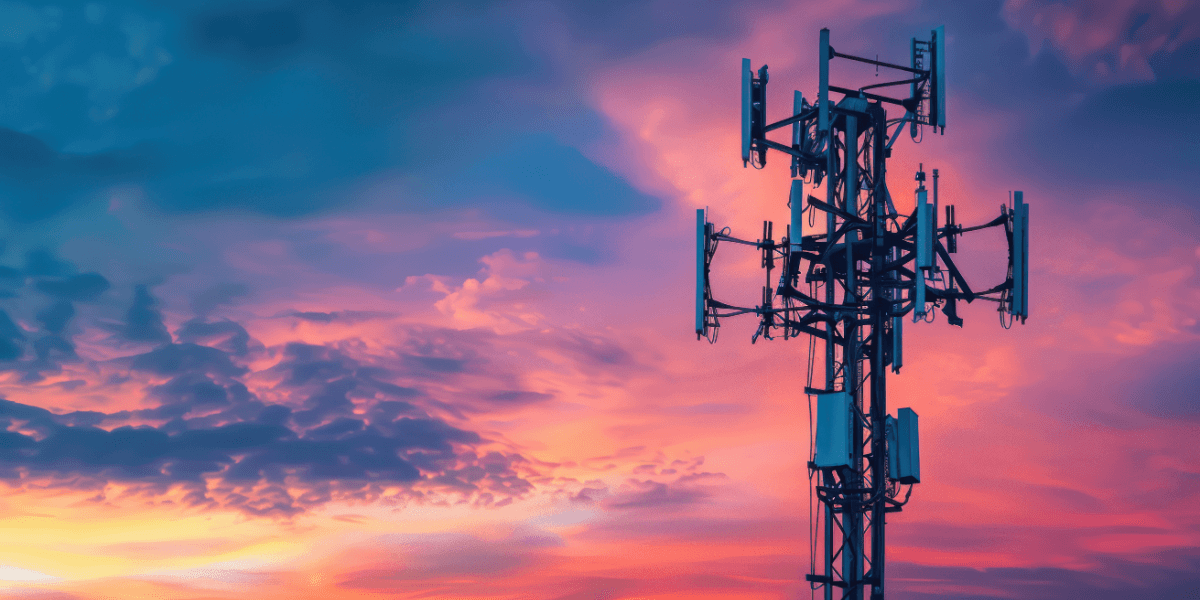
At its core, cellular communication is all about radio waves. Every text message you send, every photo you upload, and every video you stream gets converted into electromagnetic signals that travel through the air to the nearest cell tower. These signals operate on specific frequencies, carefully orchestrated by government agencies to prevent interference and ensure reliable service.
The Federal Communications Commission (FCC) and National Telecommunications and Information Administration (NTIA) manage these frequencies in the United States, dividing them into distinct bands that carriers lease for their networks [1]. It’s similar to how radio stations broadcast on different frequencies to avoid overlapping — except cellular networks use much more sophisticated technology to handle millions of simultaneous connections.
The Three-Tiered Kingdom of Cellular Frequencies
Modern cellular networks operate across three main frequency ranges, each with its own strengths and limitations. Understanding these tiers helps explain why your phone might work perfectly in one location but struggle in another.
The low-band frequencies, operating below 1 GHz, are the true workhorses of cellular coverage. These frequencies travel impressive distances and easily penetrate walls, making them ideal for rural areas and indoor coverage. When your phone maintains a signal deep inside a building or far from civilization, you’re likely connecting through these low-band frequencies. However, these bands come with a trade-off: they can’t carry as much data as their higher-frequency cousins.
Mid-band frequencies, ranging from 1 to 6 GHz, represent the sweet spot in cellular communications. They offer an excellent balance between coverage area and data capacity, making them perfect for suburban and urban areas. Most of our daily cellular activities rely on these frequencies, as they provide enough speed for streaming and downloads while maintaining reasonable coverage areas.
High-band frequencies, also known as millimeter wave (mmWave), are the speed demons of the cellular world. Operating between 24 and 100 GHz, these frequencies can transmit massive amounts of data at incredible speeds — think downloading entire movies in seconds. However, they have severe limitations: their signals travel only short distances and can be blocked by almost anything, including leaves and rain. You’ll find these frequencies primarily in dense urban areas, stadiums, and other venues where many users need ultra-fast data simultaneously.
The unifying standard: 4G
The Evolution of Cellular Technology
In the early days of mobile phones, the United States was divided between two competing technologies: GSM and CDMA [2]. This split meant that phones designed for one network type couldn’t work on the other, limiting consumer choice and creating headaches for travelers.
The introduction of 4G LTE marked a significant turning point, bringing a unified standard that all carriers could adopt. This standardization made phones more versatile and helped drive down costs. Today’s 4G LTE networks use multiple frequency bands to deliver consistent service, with carriers employing different combinations to build their coverage maps.
The arrival of 5G has added new layers to this complexity. While 5G can use existing frequency bands, it also takes advantage of previously unused high-frequency spectrum to deliver unprecedented speeds. This multi-band approach allows carriers to provide both wide coverage and ultra-fast service where needed, though building out these networks requires significant investment in new infrastructure.
Carrier Strategies and Coverage
Major cellular carriers have developed distinct approaches to using their frequency holdings, much like different airlines might focus on different routes and aircraft types. Verizon has invested heavily in high-band mmWave deployment in urban areas while maintaining robust low-band coverage for rural regions [3]. AT&T takes a more balanced approach, using multiple frequency bands across the spectrum to ensure consistent coverage [4]. T-Mobile leverages its extensive low-band holdings from the 600 MHz auction along with mid-band spectrum acquired in the Sprint merger to build what it calls its “layer cake" network strategy [5].
These different strategies directly affect the service you receive. In dense urban areas, carriers often deploy all three frequency tiers to handle heavy data demands. Suburban areas typically rely on mid-band frequencies for primary coverage, while rural areas depend heavily on low-band frequencies to maintain connectivity across vast distances [6].
The International Frequency Challenge
Cell phone frequency bands become particularly relevant when traveling internationally. Different countries allocate different frequency bands for cellular use, which explains why some phones work seamlessly abroad while others become expensive paperweights. Modern phones often support multiple frequency bands to ensure international compatibility, but it’s still important to check specific band support when planning international travel or purchasing a phone for global use.
The Future of Wireless Communication
As wireless technology continues to evolve, new approaches to frequency use are emerging. Spectrum sharing technologies allow multiple carriers to safely use the same frequency bands, improving efficiency and coverage. Satellite-to-phone services promise to fill coverage gaps in remote areas by bypassing traditional cellular networks entirely, potentially revolutionizing rural connectivity.
Research into 6G technology explores even higher frequencies, including sub-terahertz bands that could enable data speeds hundreds of times faster than current 5G networks. While these advances are still years away from practical implementation, they highlight the continuing importance of frequency band innovation in wireless communications.
Maximizing Your Cellular Experience
Understanding cell phone frequency bands helps you make informed decisions about your mobile service. When choosing a new phone or carrier, consider the frequency bands they support and how those align with your needs. If you live in a rural area, low-band coverage should be a priority. Urban dwellers might benefit more from carriers with strong mid-band and mmWave deployment.
Signal boosters and cellular repeaters can help overcome coverage challenges by amplifying specific frequency bands. However, these devices must be carefully matched to your carrier’s frequency bands to be effective. Some modern phones also include features like carrier aggregation, which can combine multiple frequency bands to improve performance.

The waves behind daily connection
The Hidden Infrastructure of Modern Life
As our reliance on mobile devices grows, the invisible infrastructure of cell phone frequency bands becomes increasingly crucial to daily life. From emergency services to remote work, from social connections to entertainment, these unseen electromagnetic highways enable the connected world we often take for granted.
The next time you make a call, send a text, or stream a video, remember the complex dance of radio waves making it possible. Your phone is constantly negotiating with cell towers, switching between frequency bands, and adapting to changing conditions — all to keep you connected to the digital world. Understanding these basic principles helps us appreciate the remarkable technology we carry in our pockets.
Take Control of Your Cellular Connection Today
Understanding cell phone frequency bands demystifies why your service works better in some places than others. As carriers continue expanding their networks and deploying new technologies, choosing the right provider for your location becomes increasingly important. Signal strength and data speeds can vary dramatically between carriers, even on the same street.
Don’t settle for dropped calls or sluggish data speeds. Take the first step toward better cellular service by discovering which carriers offer the best coverage in your area. Enter your zip code here to compare carriers, plans, and current deals available in your neighborhood.
Remember, the best carrier for your friend across town might not be the best carrier for you. Local terrain, building density, and network infrastructure all affect service quality. By checking coverage specific to your location, you can ensure you’re getting the most reliable connection and the best value for your money.
Sources
[1] Fcc.gov. “Radio Spectrum Allocation"
[2] Geeksforgeeks.org. “Difference between GSM and CDMA"
[3] Verizon.com. “5g network components"
[4] Att.com. “Benefits of the AT&T 4G LTE network"
[5] Gsma.com. “How T-Mobile’s Merger with Sprint is Changing the Game for 5G"
[6] 5gtechnologyworld.com. “What are 5G’s, the different types, and how are they used?"